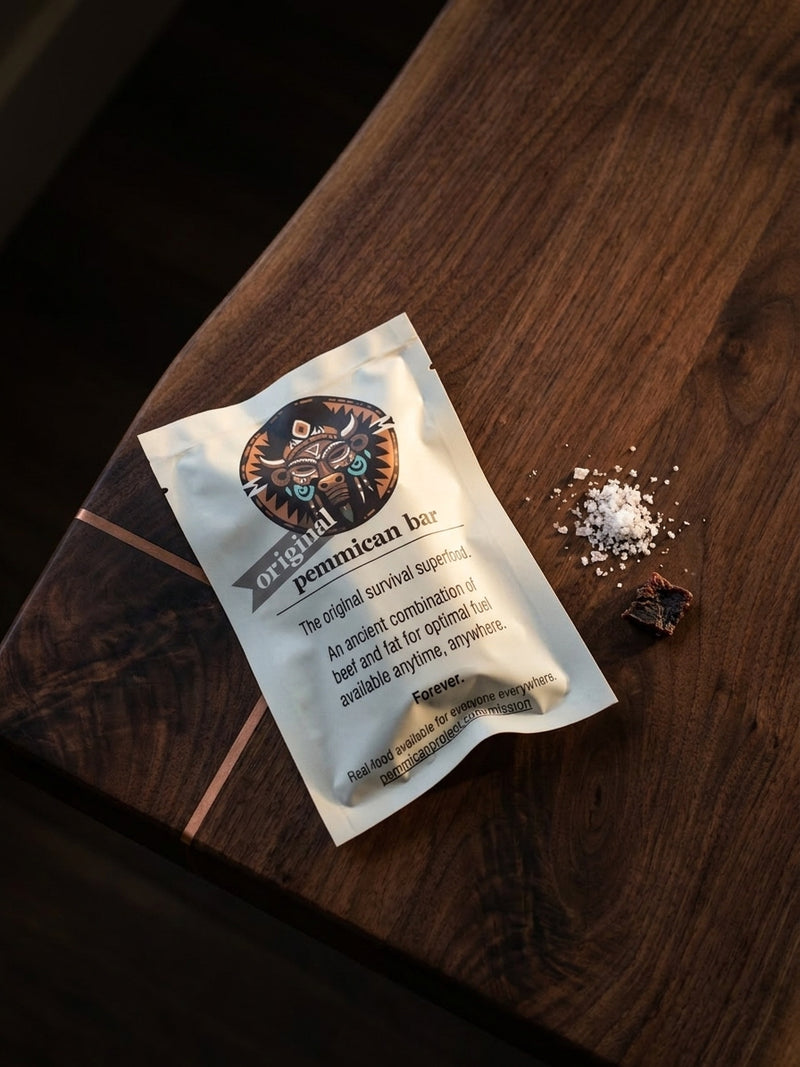
Classic
Beef · Tallow · Salt
The ancestral standard. The recipe that fed entire nations and crossed the Antarctic. Most people start here.
Beef, tallow, salt. Native American tribes lived on it for thousands of years. Polar explorers crossed Antarctica on it. We didn't change the recipe.
This version comes from Pasture for Life certified farms. Cattle that grazed on pasture their entire lives, the way cattle have always lived.
Not your usual protein bar.
Pasture for Life Certified
Beef, tallow, salt. The cattle ate nothing but grass.
Free UK shipping over £40. Club members get 20% off.
It's not for everyone. Start with our three-bar trial. Classic, berry, honey. Try that before committing to a full bag. If you already know you love pemmican, you're in the right place.
Not your usual protein bar.
It's still the food humans actually used to eat. Beef, tallow, salt. Three ingredients, no shortcuts. Native American tribes lived on it for thousands of years. Sir Ernest Shackleton, the British polar explorer whose ship was crushed by Antarctic ice in 1915, called it the essential thing his crew survived on.
We didn't change any of that.
What we did do is source the beef for this version from farms that are Pasture for Life certified. That means every animal grazed on pasture for its entire life. No grain. No concentrates. Just grass, and in winter, hay conserved from the same fields. The same commitment to three ingredients we have in the bar, these farms have in the way they raise their cattle.
Most people probably won't love the first bite. The ones who do never stop.
This isn't a protein bar. It's beef and fat from cattle that lived the way cattle were built to live. Grazing on pasture, from birth to slaughter. Native American tribes carried it across the Plains for months. Polar explorers crossed Antarctica on it.
We brought it back because it works. This version brings it back with the farming to match.
In the UK, meat can be labelled grass-fed if the animal got just 51% of its diet from grass. The other half could be grain, corn, concentrates. That's the legal minimum.
Pasture for Life certification is different. It means 100% pasture, for the entire life of the animal. When the fields are growing, the cattle are grazing. In winter, they eat hay or silage made from those same fields. Nothing else. The certification is independently audited every year. Farms can't just put the mark on a label.
It's the only UK certification that actually guarantees what most people assume "grass-fed" already means.
What the certification requires:
Cattle evolved as grazing animals. Their digestive systems were built for grass, not grain. Pasture for Life farming lets them do exactly that. Move across fields, graze, fertilise the land as they go.
When it's done well, it isn't extraction. Hooves break compacted soil. Manure feeds soil microbes. Deep-rooted grasses pull carbon down and hold it. The farms behind this certification are managing land that actively improves over time.
Well-managed grassland stores more organic matter in the soil. It supports more insects, more birds, more plant diversity than arable land. It filters water. It sequesters carbon.
This isn't a fringe idea. It's what farming looked like before it was industrialised, and what a growing number of farmers in the UK are choosing to return to. The Pasture for Life certification exists to find and verify those farms. And to make it possible for people buying food to support them directly.
The cattle live better. The farms get stronger. The land improves. That's the whole point.

If you're used to a high-fat or carnivore diet, you'll probably love it. If you're used to a low fat diet, it might take some getting used to.
Now, why does a typical protein bar taste the way it does. Twenty-five ingredients. Soy isolates pretending to be protein. Emulsifiers and stabilisers faking the chewy texture. Artificial flavours engineered to taste like dessert. Seed oils. It tastes great because it's been designed to taste great, not because it's food.
A pemmican bar is just beef and fat. Nothing else doing the work. The first bite can be a surprise. Then it isn't.
Pasture-fed beef has a slightly deeper, more mineral flavour than grain-fed. Some people notice it. Most don't. The bar tastes like pemmican either way.
"Didn't like these at all, ended up giving them to my dogs"
Anna
"Tasted really horrible and looked like a lumpy turd"
Victoria
"The texture is a bit like fudge, but salty, meaty fudge, which is not a nice surprise at all."
Amy
You're up for trying something most people haven't.
You want real food, not a manufactured product loaded with additives you don't need.
You think fat is fuel, not the enemy.
You're carnivore, keto, or close to it.
You care how the land behind your food is farmed.
You want to know the animal that fed you lived the way it was built to live.
You read ingredient lists.
You're new to eating real fat. Start with our Carnivore Crisps.
You count grams of protein above everything else. Our Crisps will suit you better.
You want sweet, crunchy, or familiar. The Crisps are closer to that.
You expect every bite to taste like dessert.
From the buffalo hunters of the Great Plains.
The word pemmican comes from the Cree word pimîhkân. Pimî means fat or grease.
Native American tribes made it from buffalo. Dried in the sun. Pounded into powder. Mixed with rendered fat. Sealed in rawhide pouches that kept moisture out for years.
The buffalo they hunted were wild grazers. They spent their lives on the same open pasture that shaped the Plains. The fat and protein in the meat came directly from that life. Animals eating what they were built to eat, on land that sustained them.
Here's why it worked. Nomadic tribes couldn't carry a garden or keep a herd. They needed food that was light, lasted forever, and packed serious calories. Pemmican did all three. One bag held a quarter of a million calories, enough to feed a person for four months. No fridge. No cooking. No spoilage. It was the most efficient food humans had ever figured out how to carry.
Tribes travelled vast distances to trade for it. It was a form of portable wealth.
For ten thousand years, this is how the people of the Plains carried their food.
This is the recipe we still make. Beef, tallow, salt. The cattle that supply it grazed on pasture, the way the buffalo did. Nothing has been added since.
By the late 1800s, pemmican had crossed the ocean. The Hudson's Bay Company shipped it through London to fuel a fur trade that mapped the continent. Then the polar explorers found it.
Roald Amundsen took it to the South Pole. His men received 450 grams a day, packing 5,000 calories against the cold. He even made a special pemmican for his sled dogs to keep them running through Antarctic winters.
Then there was Sir Ernest Shackleton. His ship the Endurance was crushed by Antarctic ice in 1915. His crew survived by rationing the pemmican they had with them. They mixed it with snow and ate it as a stew. It was the difference between life and death.
He called it the essential thing.
Tins of polar pemmican have been opened at abandoned Antarctic camps a hundred years later. Still edible. We didn't have to update the recipe. It already worked.
Our standard pemmican bar uses excellent British beef. It is the same three-ingredient recipe. It is the same ancient food. Nothing about it has been compromised.
This version uses beef from Pasture for Life certified farms. The cattle grazed on 100% pasture their whole lives. The farming method supports the soil, the land, the animals, and a way of raising beef that we think is worth backing.
Both bars nourish you. Both bars are the real thing. The difference is in the farming philosophy behind the beef. And in what you want your food to support.
The ancestral standard. The recipe that fed entire nations and crossed the Antarctic. Most people start here.
Indigenous tribes have made this version for as long as the original. The acidity preserves the meat for even longer.
A pinch of honey for the sweet-leaning palate. Still real food. Still passes the ingredient-list test.
Almost every modern disease is on the rise. Not because people choose to be unhealthy, but because the bad options outnumber the good ones, everywhere you look. Real food has become expensive, hard to find, and outmarketed by things pretending to be food.
We started this to flip that. Real, clean, animal-based food, made the way it was meant to be made, available to everyone, at the lowest possible price.
The grass-fed bar is an extension of that mission, not a different one. It's the same food, from farms that take the full commitment seriously. The animal, the land, the soil, the ecosystem around them. We think that kind of farming is worth supporting. We want to make it possible for people to do that, directly, through what they eat.
We are not building a snack company. We are building the case that real food can be the default again.
Beefy. Salty. Rich. Dense. The fat is the main thing you notice. It's not like jerky. Jerky is lean and dry. Pemmican is fatty and soft. Pasture-fed beef has a slightly deeper, more mineral flavour. Some people notice it, many don't.
The only UK certification that guarantees 100% pasture-fed, for the animal's entire life. In the UK, food can legally be labelled "grass-fed" if just 51% of the animal's diet was grass. Pasture for Life means 100%, independently audited, every year.
Same three-ingredient recipe. Same ancient food. The beef in this version comes from Pasture for Life certified farms. Cattle that grazed on 100% pasture their entire lives. The standard bar uses excellent British beef. Both are real food.
No. It's made from good British beef, raised to solid welfare standards, with no additives, no fillers, no nonsense. It's the same recipe. The grass-fed version is a different sourcing choice, not a judgement on the original.
12 months unopened. Pemmican has been used as a long-storage food for centuries. Real pemmican wrapped in rawhide has been found edible decades later. We're being conservative.
Beef, tallow, salt. That's classic. Berry adds wild berries. Honey adds honey. Read the back of the pack. The list is the list.
No. But you'll probably like it faster if you're already eating real fat. If you're not, try our Chicken Crisps first, then come back.
Your first 5-pack comes with a 100% money-back guarantee. If for whatever reason you don't like it, just let us know and we'll refund the entire amount, no need to return. I'm sure your dogs will like it.
20% off everything. Monthly gift on us. Cancel anytime, no friction. The way to make real food a habit, not a special order.